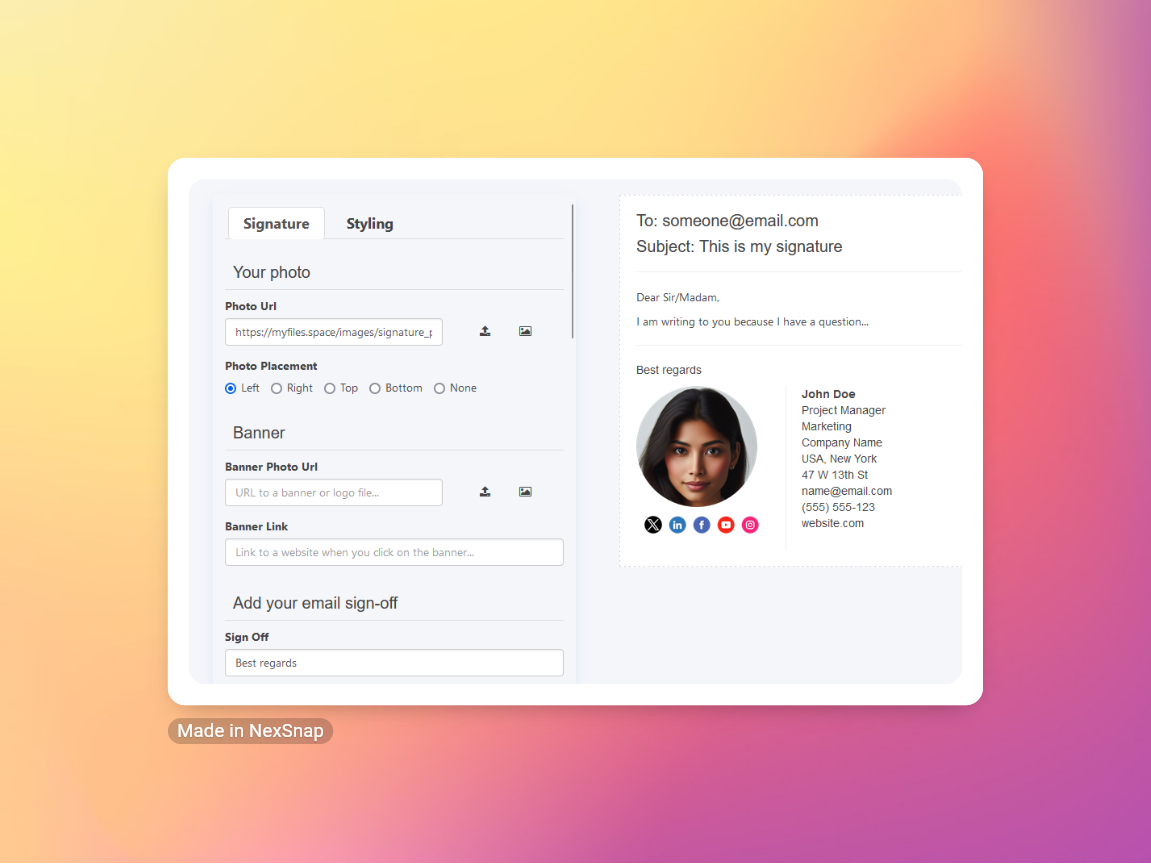
In today’s digital age, first impressions matter more than ever. Your email signature is often the first thing people see when you reach out to them, making it a crucial element of your professional brand. That’s why we’re excited to introduce our new HTML Signature Creator – a powerful yet user-friendly tool that allows you to craft stunning email signatures that leave a lasting impression.
Stand Out from the Crowd
With our HTML Signature Creator, you can say goodbye to plain-text signatures that blend into the background. Our tool empowers you to design visually striking signatures that truly reflect your brand’s personality and capture the attention of your recipients. From eye-catching logos and headshots to vibrant color schemes and custom icons, the possibilities are endless.
Effortless Customization
Creating a professional email signature has never been easier. Our intuitive interface guides you through the design process step-by-step, allowing you to personalize every aspect of your signature. Tweak fonts, adjust layouts, and incorporate dynamic elements like social media links or promotional banners with just a few clicks.
Consistent Branding Across Your Organization
Maintaining a cohesive brand image is crucial for businesses of all sizes. With our HTML Signature Creator, you can effortlessly roll out uniform email signatures across your entire organization. Ensure that every team member’s signature reinforces your brand’s identity and values, fostering a polished and professional appearance in all client communications.
Cross-Platform Compatibility
Our HTML signatures are optimized for seamless display across all major email clients and platforms, ensuring a consistent experience for your recipients. Whether they’re using Outlook, Gmail, or a mobile device, your signature will render flawlessly, enhancing your professional credibility.
Start Making an Impression Today
Take your email communication to new heights with our HTML Signature Creator. Sign up now and experience the power of a well-designed email signature that leaves a lasting impact on your audience. Elevate your brand, streamline your marketing efforts, and enjoy the convenience of a centralized signature management solution.
Our quick page feature lets you instantly create a public webpage of the contents of your file. You can then share this page.
Some usage examples:
Sending a page to colleagues for feedback
Sharing information with users or colleagues
Creating a temporary page for an event or product
It is important to note that although your quick page will stay live for as long as you are a subscriber, we do not recommend it for long-term use. If you cancel your subscription, your quick pages will be deleted 30 days after your cancellation.
We block search engines from crawling quick pages to avoid any potential abuse of this feature.
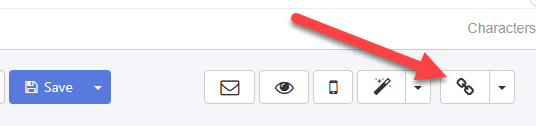
How to create your quick page. Just click the link icon below the editor window:
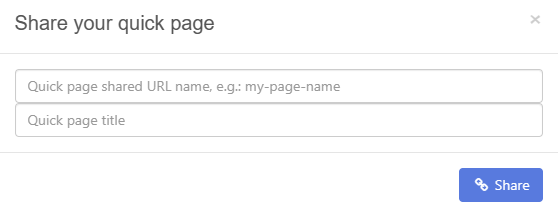
Then, give your page a title and preferred URL name. Click the share icon to generate your quick page.
Your quick page URL will get copied to your clipboard, ready for pasting.
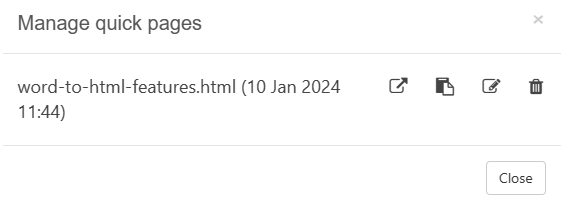
Should you need to retrieve your quick page URL or delete your quick page, you can do so by clicking the drop-down arrow next to the link icon, and select manage quick pages.
Here, you can then view, copy your quick page URL to the clipboard, and edit or delete your quick page.
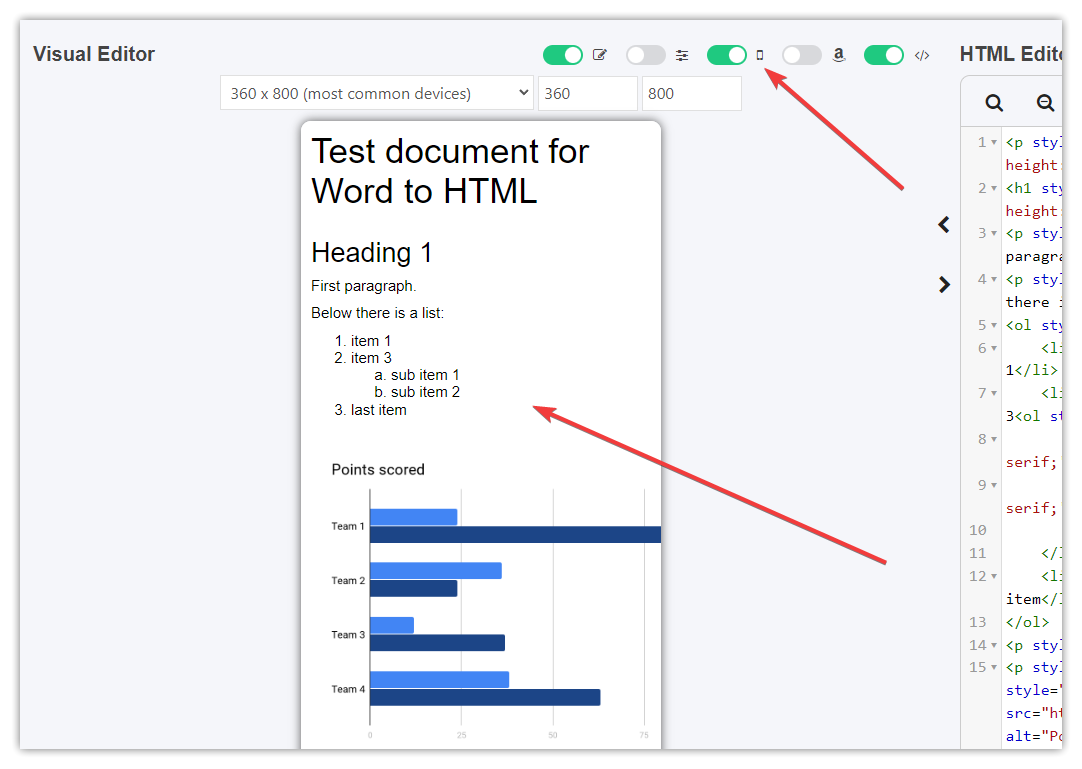
We are introducing our new Mobile Responsive Visual Editor feature! You can view and edit your content in the mobile device preview mode. Just click the Mobile Icon checkbox above the Visual Editor and try it out. PRO users can select different predefined resolutions or they can enter their custom screen resolution.
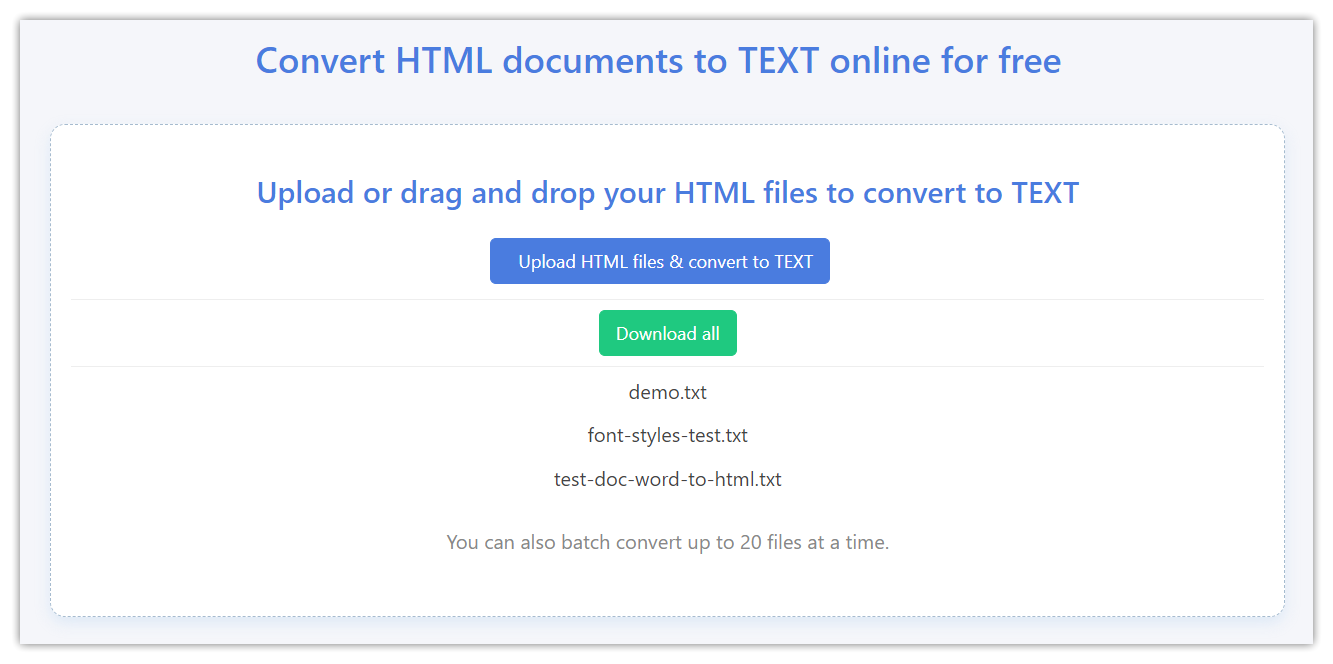
Exciting news! Our latest update for the PRO users now allows you to bulk convert a variety of different documents to PDF, DOCX, and plain TEXT with just one click. This new batch conversion feature makes it easier than ever to convert more files. Give it a try and let us know what you think!
In this guide, we will explore all the various ways for you to convert Word documents to HTML. We are experts at converting Microsoft Word documents to HTML with over 20 years of experience. We have several tools to help you convert and process your documents to clean HTML:
Word To HTML – our Web App is great for quick clean-ups (paste content and process), uploading Word documents, and converting them to HTML
Doc Converter Pro Web App – the best choice if you need to bulk convert and process documents online
Doc Converter Pro API – for programmers looking to add document conversion to their Apps
Using MS Word built-in save as HTML option
If you have MS Word installed you can use the built-in save to HTML option. All you need to do is:
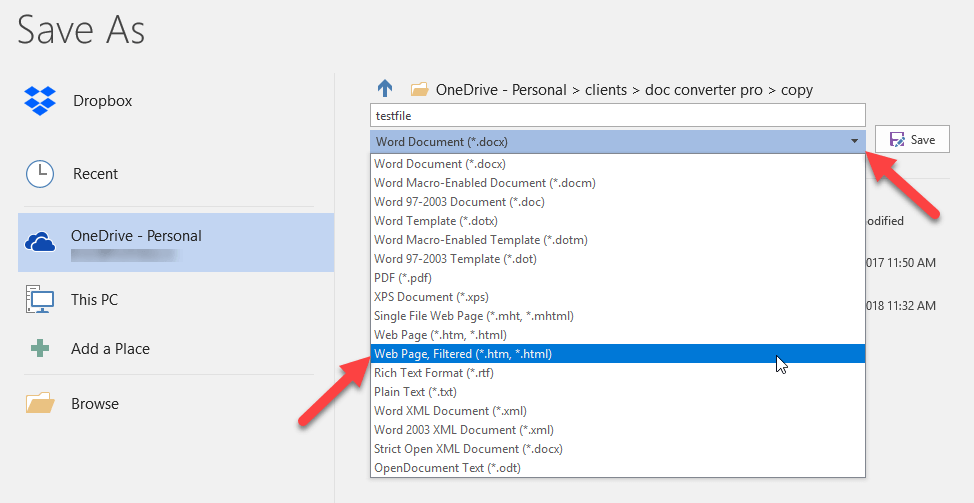
Go to the file menu
Select Save as
In the drop-down file type box select, Web Page, Filtered
Click Save
Easy eh? Not so fast there are two significant issues with using Word to save your HTML, the file sizes are large and the quality of the HTML is not very good.
Large file sizes when using MS Word to convert documents to HTML
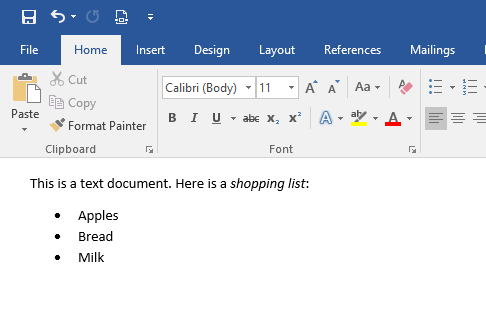
If you create a simple test document like the one shown below, then save it to HTML you will see that the resulting web page has more than 100 lines of code.
If we use Upload file and convert the same file with one of our tools like WordToHTML.net you will get around 40 lines of code when full page mode is enabled, which is less than half of the size of the Word version. If you copy and paste content from an MS Word document into Visual Editor you will get even 19 lines of code, which is less than one-fourth of the size of the Word version. You can try this experiment yourself or view our test files:
This example is for a simple document, for complex files the file size difference can be even larger.
Why does it matter if my HTML code is large?
Apart from practical issues like server space web pages with lots of code that are longer to download. Google penalizes sites with slow download times, and more importantly, users are impatient. According to research nearly half of web users expect a site to load in 2 seconds or less, and they tend to abandon a site that has not loaded within 3 seconds. In the modern internet, speed is the most important factor.
Word generates messy non-standard HTML when converting from Word to HTML
The other big issue with using Word is it creates overly complex non-standard HTML. Now to be fair to Microsoft, we imagine that the main reason they do this is to try to keep the layout of your files as similar as possible, but it does create issues. In our example file if we look at how Word handles the list items, this is the code it generates:
<p class=MsoListParagraphCxSpFirst style=’text-indent:-18.0pt’><span
style=’font-family:Symbol’>�<span style=’font:7.0pt “Times New Roman”‘>
</span></span>Apples</p>
A lot of code just to display the word apple on a list. You will also notice that Word does not use the standard HTML Li and ul list tags. It uses CSS to format the lists, if you strip out this CSS the list becomes normal text. In comparison, this is the code generated with WordToHTML.net when you upload a document and convert it.
If you just paste content from the MS Word test file into Visual Editor and choose to keep formatting you will be left with this very clean code:
<li>Apples</li>
So you can see if you want the cleanest HTML possible you need to use a proper tool to convert your Word files to HTML.
What is the best way to convert Word to HTML?
Here are our recommendations based on your various needs.
I want an online tool that will quickly convert my text or single documents to clean HTML:
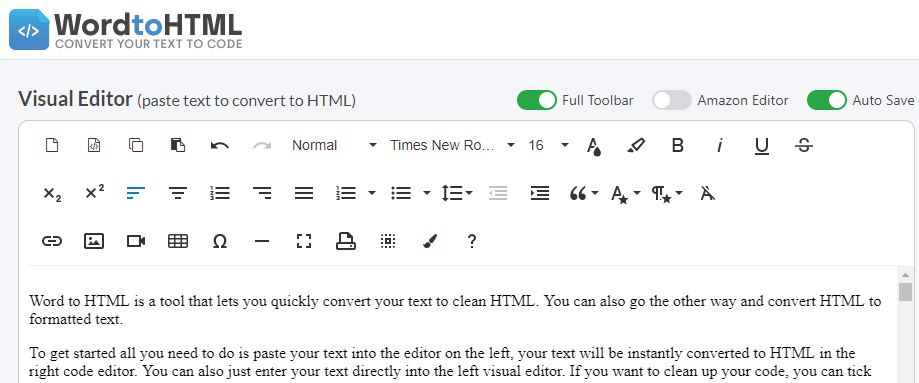
Our online WordToHTML.net tool lets you paste your text into the Visual Editor and your text gets converted to HTML instantly. It is super easy to use and free for basic features.
For users who need more, our WordToHTML.net Pro version is only $10 a month and gives you the ability to upload Word (DOCX/DOC), PDF, and other file types and have them converted to HTML. You also have the ability to save your files, create conversion templates, and more cleanup features. You can try the Pro version for free.
I need a Windows application to convert lots of Word or PDF files to HTML:
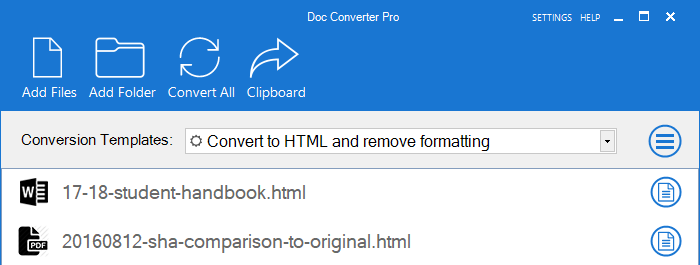
We have a Windows desktop product called Doc Converter Pro. It is an easy way for you to convert your Word, PDF, and other file formats to HTML. You can convert one file or batch convert hundreds of files in one go. You can also create your own custom templates to give you full control over your conversions.
The advantage of a desktop application is it will be faster if you are converting lots of files also it is a good option if your files are private as nothing will leave your system.
I need a web app to batch convert my Word documents to HTML:
Our web app version of Doc Converter Pro Online gives you all the great features of our desktop version, but as it is web-based, you can work from any computer and any browser. You can also share accounts with your team.
How does Doc Converter Pro Web App differ from WordToHTML.net? Doc Converter Pro is designed for batch converting lots of documents whereas WordToHTML.net is better for cleaning up pasted text or converting single documents.
I am a programmer who needs an API solution to convert our Word files to HTML:
No problem. We have a Web API version of Doc Converter Pro Online. With a few lines of code, we take all the hard work out of converting your documents. Try our free trial here…
We are here to help…
If you need more advice, feel free to contact us anytime. We can advise you on the best strategy for your needs.
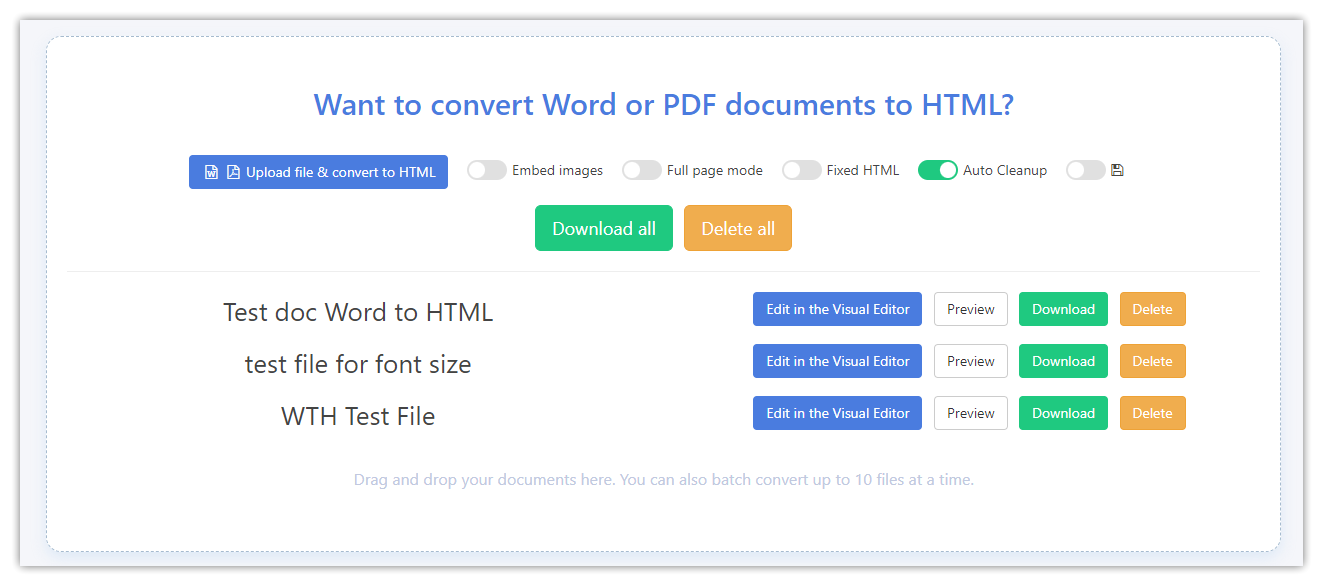
We are happy to announce that we have shipped a feature to upload & convert more than one document to HTML.
Just go to the main Word To HTML page and select and upload more than one document or drag and drop more than one document into this section:
Word To HTML will upload and convert each document one by one.
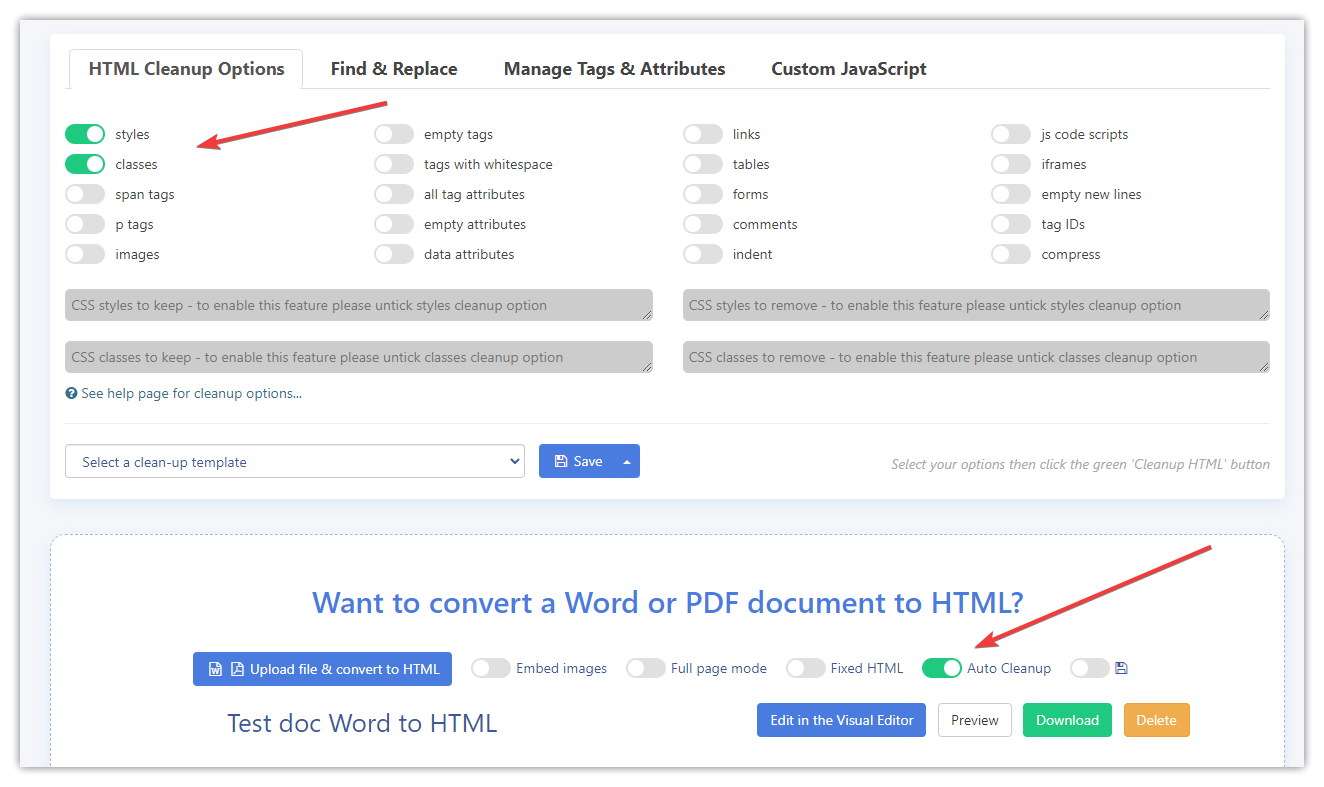
Optionally you can run a cleanup process after your documents have been converted to HTML, just enable the Auto Cleanup option and select some cleanup options.
We are thrilled to announce another milestone in the evolution of our SAAS platform – the launch of the Italian language version of Word to HTML! With this new addition, Italian speakers can now effortlessly convert their text into HTML, opening up exciting possibilities for web content creation, formatting, and more. Whether you’re a seasoned web developer or just starting out, Word to HTML is here to streamline your workflow and make the process of generating HTML code a breeze.
Empowering Content Creators
As the digital landscape continues to expand, the demand for well-formatted and visually appealing web content is at an all-time high. From bloggers and marketers to web designers and developers, Word to HTML is designed to empower a diverse range of content creators. With the Italian language version now available, Italian-speaking users can seamlessly translate their ideas into well-structured HTML, saving valuable time and effort in the process.
Instant Conversion, Effortless Process
Our Italian version of Word to HTML ensures a seamless and user-friendly experience. Simply paste your text into the platform, select the desired formatting options, and with a click of a button, watch your content transform into clean and valid HTML code. This process eliminates the need for manual coding, reduces the risk of errors, and accelerates your content production.
Key Features of Word to HTML: Italian Version
Intuitive Interface: The Italian version of Word to HTML maintains the same intuitive interface that our users love, now tailored for Italian-speaking audiences.
Customizable Formatting: Whether you want to add headings, paragraphs, lists, or hyperlinks, Word to HTML offers a variety of formatting options to ensure your content looks just the way you want it.
Responsive Design: With mobile responsiveness becoming increasingly crucial, our platform generates HTML that adapts flawlessly to various screen sizes.
Compatibility: The generated HTML is compliant with modern web standards, ensuring compatibility across different browsers and devices.
Efficiency: Save valuable time and resources by sidestepping the intricacies of manual HTML coding. Focus on your content, and let Word to HTML handle the technicalities.
Get Started Today!
Are you ready to take your content creation process to the next level? Whether you’re a blogger looking to enhance your articles or a business owner aiming to improve your website’s appearance, Word to HTML in Italian is at your service. Say goodbye to the complexities of HTML coding and hello to an efficient, user-friendly solution that streamlines your workflow.
Conclusion
The launch of the Italian version of Word to HTML marks a significant step forward in our commitment to providing accessible and efficient tools for content creators worldwide. We invite you to explore the capabilities of our platform, harness the power of instant HTML conversion, and elevate your digital presence.
Visit our website today to experience the Italian version of Word to HTML firsthand. Create, format, and transform your content with ease, all while enjoying the benefits of a platform designed to simplify the complexities of web content creation. Your journey to effortless HTML conversion begins here!
Are you looking for a way to quickly generate content? Our new AI Writer tool is here to help! AI Writer allows you to quickly and easily create polished, high-quality content without the long hours of editing or creative brainstorming.
Whether you’re a content creator or a website owner, AI Writer can make your life easier. You can use the tool to generate blog posts, articles, press releases, and marketing materials with just a few clicks. AI Writer follows best practices for SEO, so you don’t have to worry about optimizing your content either.
AI Writer uses natural language processing to analyze your keywords and generate coherent, engaging content. It can also detect common spelling and grammar mistakes, so you don’t have to worry about corrections later on. The AI Writer uses powerful algorithms to help make sure that the generated content is top notch.
What’s more, AI Writer is incredibly cost effective. It doesn’t take huge budgets to produce high-quality content. AI Writer helps you save both time and money by automating the entire process.
If you’re looking for a fast, easy way to generate content, give our AI Writer tool a try. You may never go back to manual content creation again!
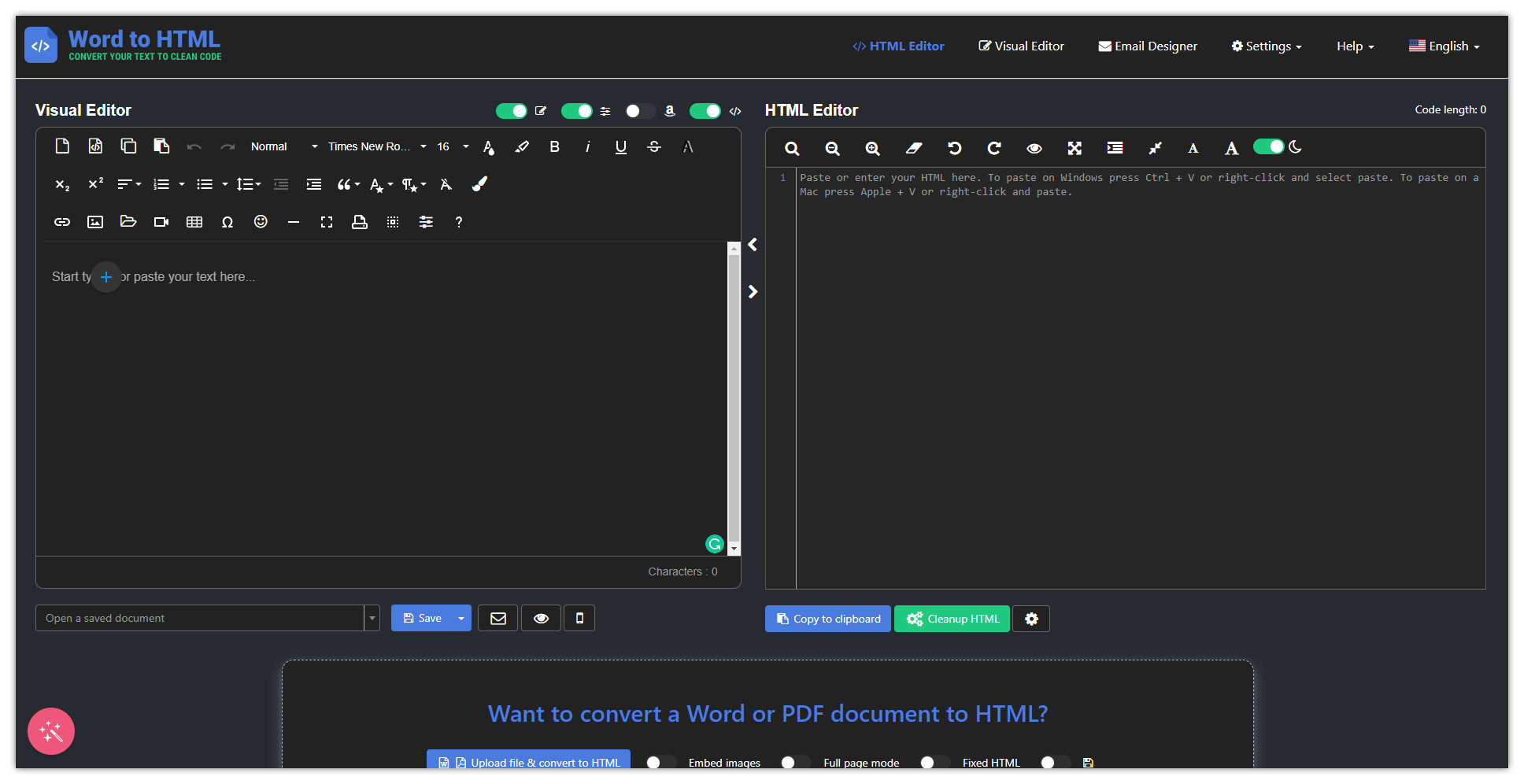
Exciting news everyone! Our website just got a stylish new upgrade with the latest dark theme for the whole site. Say goodbye to those bright, eye-straining screens and hello to a sleek and sophisticated new look.
Not only does the dark theme color provide a chic and modern appearance, but it also helps reduce eye strain, making it easier on the eyes for prolonged use. The dark background paired with contrasting light text provides an immersive and comfortable experience for all users.
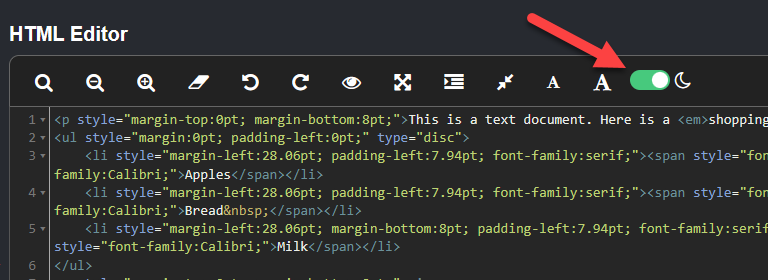
So, what are you waiting for? Give our new dark theme color by clicking the moon icon at the top right side of the HTML code editor or by selecting the dark theme on the Settings page. Let us know your thoughts! We’re sure you’ll love it as much as we do.
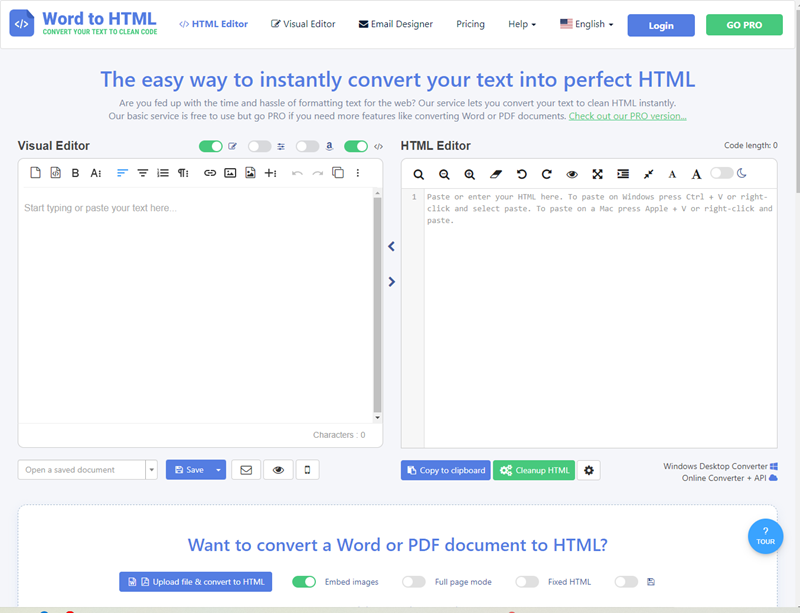
It has been a few years since we last updated the site design, so we decided to do a refresh. The new site design is now live.
The core features of the site are still the same we just cleaned up the design to make it easier to read. We have introduced a new blue and green colour scheme which should make the options and links more obvious.


 Exciting news! Our latest update for the PRO users now allows you to bulk convert a variety of different documents to PDF, DOCX, and plain TEXT with just one click. This new batch conversion feature makes it easier than ever to convert more files. Give it a try and let us know what you think!